
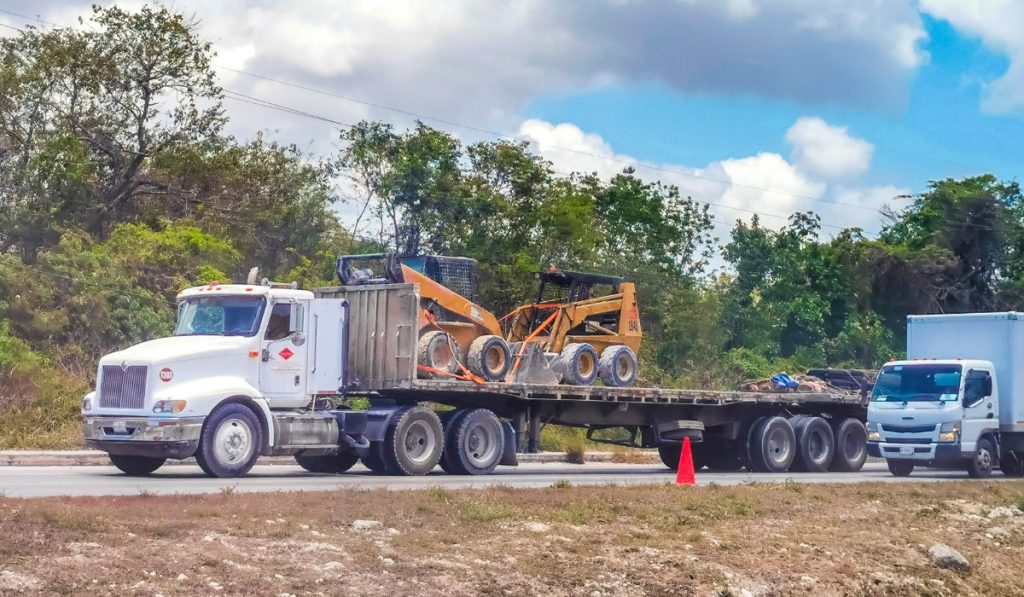
The main types of tow trucks include flatbeds for the safest all-wheel transport, wheel-lifts for quick roadside moves, hook-and-chain, integrated heavy-duty wreckers for buses and semis, and rotators for major recoveries.
Common Types of Tow Trucks
Tow trucks come in different types, each designed for specific towing and recovery situations. Flatbed tow trucks carry the entire vehicle on a level platform with all four wheels off the ground, making them the safest option for transporting most vehicles.
Wheel-lift tow trucks use a hydraulic system to lift one axle while the other wheels stay on the road, which is useful for quick roadside assistance and short-distance towing. Hook-and-chain tow trucks are an older method that uses chains to pull vehicles, though they are now mostly used for junk or heavily damaged cars.
For larger vehicles like buses and semi-trucks, integrated tow trucks provide the strength and stability needed for safe transport, making them essential for heavy-duty towing.
All Types of Tow Trucks
- Flatbed/rollback — A truck with a hydraulically operated, tilting platform that fully lifts vehicles off the ground for safe, damage-free transport.
- Wheel-lift — Uses a metal yoke to lift either the front or rear wheels, ideal for quick, local towing jobs.
- Hook-and-chain — An outdated method using chains attached to the vehicle’s frame or axle; rarely used today due to high risk of damage.
- Integrated/self-loader — Also called a “wrecker,” this truck combines a boom and underlift system for controlled loading, often used in repossession or tight spaces.
- Heavy-duty wrecker — Built for large vehicles like semis, buses, and RVs; equipped with high-capacity winches and stabilization systems.
- Rotator — A specialized heavy-duty wrecker with a rotating boom capable of lifting and swinging vehicles, used in complex recovery operations.
- Boom wrecker — A general term for wreckers equipped with a hydraulic boom; the boom is a tool, not a truck type, and appears on many wrecker models.
A Quick Guide to What Shows Up When You Call
Dedicated Towing and Recovery is a trusted towing company serving Fort Collins and nearby areas. We match the right tow truck to your vehicle’s needs. This keeps your car safe and helps avoid damage. Our team gives fast, reliable roadside help through our 24/7 emergency towing, ensuring help arrives whenever you need it.
When you call for help, the type of tow truck that arrives matters a lot. Using the right truck protects your vehicle. Different trucks are made for different jobs. This is important for sensitive vehicles or tough spots.
If your car is stuck in a ditch, broken down on a highway, or trapped in a parking garage, the right tow truck can save you time and money. Using the wrong truck can cause damage or delays. We focus on using our experience and clear communication to keep you safe.
Why Tow Truck Types Matter
Picking the right tow truck isn’t just about the equipment. It’s about keeping your car safe. Flatbed tow trucks lift your whole car off the ground. This stops damage to the wheels, suspension, or undercarriage. This is important for all-wheel drive and electric cars. Wheel-lift tow trucks are good for quick help in tight spots, like city streets or parking garages.
If the tow truck doesn’t fit your car’s needs, there’s a bigger risk of damage. Luxury cars, low-clearance vehicles, and motorcycles do best with flatbed towing. Accident recovery often needs special wreckers with winches and underlift systems, which is why our team provides professional accident recovery with the right equipment.
Access is also a big factor. If your car is down a hill or stuck after a crash, we send trucks with booms, winches, or tow dollies. Each truck has strengths. Knowing these details helps us keep your car safe.
How Dispatch Chooses the Right Truck
Dispatchers at Dedicated Towing and Recovery look at your car’s make, model, and condition to pick the best tow truck. We also think about where you are and how easy it is to reach your car.
Our team trains dispatchers to ask smart questions. Is your car all-wheel drive? Are the wheels locked? Are you in a tight-knit neighborhood or out in the open? Each answer helps us send the right truck. For example, we might send a flatbed for a Tesla with a dead battery or a wheel lift for a sedan in a parking garage.
For accident scenes or cars off the road, we send wreckers with winches or booms. We use our experience to get you help fast and keep your car safe.
Types of Tow Trucks – Roadside, Accident Recovery, Heavy-Duty
Choosing the right tow truck depends on your car, where you are, and what happened. Here’s how to match your needs with the right truck.
Fast Match-Ups (by location – garage, ditch, highway, tight parking)
- In a parking garage or tight spot, ask for a wheel-lift tow truck.
- For ditch or off-road help, you’ll need a winch-equipped truck.
- Highway breakdowns often need quick wheel-lift towing.
Wheel-lift tow trucks are great in tight places like parking garages. When your car is stuck in mud or off the road, recovery trucks with winches pull you out. On highways, wheel-lift towing is fast and keeps traffic moving.
Fast Match-Ups (by condition – accident, locked wheels, no keys)
- After an accident, ask for accident recovery with a flatbed.
- For locked wheels or missing keys, a winch or dollies may be needed.
- We make sure the right equipment is sent for your car’s condition.
Accident recovery is about handling your car with care. Flatbeds are best for damaged cars. Locked wheels or missing keys need dollies or winch-outs. We always use the right tools for your situation.
What is a Tow Truck (and What’s a “Wrecker”)?
A tow truck is a vehicle that moves broken or damaged cars using tools like wheel lifts, winches, or flatbeds. A wrecker is a tow truck made for accident recovery. It has a boom, underlift, and tow dollies. These trucks help with safe and quick towing.
A tow truck is built to move cars that can’t drive. A wrecker is for tough rescues, like cars in ditches or after crashes. The main difference is that wreckers have extra tools for hard jobs.
With over a decade serving Fort Collins, Dedicated Towing and Recovery knows the difference between tow trucks and wreckers. Tow trucks move cars for breakdowns or parking problems. Wreckers handle emergencies like crashes or cars stuck off-road. Wreckers have booms, winches, underlift systems, and tow dollies for the hardest jobs.
A boom is a hydraulic lifting arm used on many types of tow trucks and wreckers. It is not a truck type itself. Hook and chain is a towing method, not a boom truck—these terms should not be used interchangeably.
Towing vs Recovery – What’s the Difference?
Towing means moving a car from one place to another when it can’t drive. Recovery means getting a car out of a tough spot, like after a crash or from a snowbank. We use a wrecker for recovery jobs that need special tools and skills. Recovery is often harder and needs winches, booms, and trained operators.
Common Tow Equipment
Tow trucks and wreckers use special tools to do the job right:
- Boom — Hydraulic arm for lifting cars from ditches or hills.
- Winch — Heavy cable for pulling cars onto a flat surface or out of mud.
- Underlift — Lifts cars by the wheels for safe towing.
- Tow dollies — Small platforms for two wheels when not all wheels can roll.
Knowing how to use these tools is key, especially in emergencies. The right tool keeps your car safe.
Tow Ratings and Vehicle Weight
Tow rating and GVWR (Gross Vehicle Weight Rating) tell us which tow truck can move your car safely. If the truck is too small, it can damage your car or be unsafe.
Light wheel lifts are good for sedans, but bigger trucks or SUVs need more power, like underlifts or boom wreckers. We always check tow rating, car size, and special needs to keep every job safe.
Flatbed Tow Trucks (Rollback) – The Safest Choice For Many Vehicles
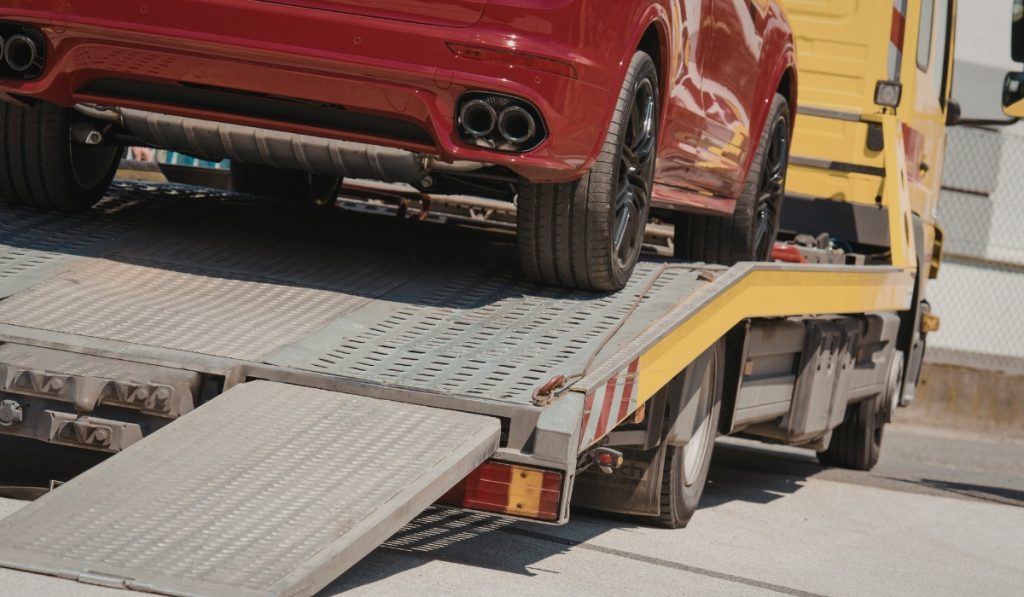
A flatbed tow truck, or rollback, has a long, flat platform that tilts and slides back to load cars. Flatbeds stop drivetrain damage. They’re the top choice for high-value, special, and low-clearance cars.
Flatbed tow trucks are a big part of our fleet because they’re safe and flexible. The bed tilts to the ground, and a winch pulls the car on. All wheels stay off the road, so there’s less risk of damage. This is great for all-wheel drive and electric cars.
When a Flatbed Tow Truck is the Right Call
Flatbeds are best when other towing could hurt the car, especially during long-distance towing where safety matters even more. We recommend flatbed towing for:
- All-wheel-drive vehicles — Stops drivetrain or transmission damage.
- Electric vehicles (EVs) — Protects motors and batteries.
- Low-clearance sports cars — Avoids scraping the bottom.
- Motorcycles — Keeps them upright and steady.
- Vehicles with locked wheels — Easy to load, even if wheels won’t turn.
These cases are common in Fort Collins, and flatbeds are the safest choice.
How Vehicles Are Secured on a Flatbed
Securing your car is key to safe towing. Our technicians use:
- Straps — Hold tires tight.
- Chains — Add safety for heavy loads or long trips.
- Soft ties — Protect fancy wheels and paint.
- Winch — Loads the car smoothly.
We double-check every strap to keep your car safe on the road.
Wheel-Lift Tow Trucks – Quick and Versatile
A wheel-lift tow truck uses arms to lift a car by its tires. This makes towing fast and easy, especially in tight spots. Wheel lifts are safer than old hook-and-chain trucks, so they’re popular for local jobs.
We use wheel-lift tow trucks in Fort Collins for quick, local towing, and we also provide fast roadside assistance for similar situations. The system has a metal yoke that slides under the drive wheels and lifts them up. This lowers the risk of damage and helps us move cars in crowded garages or narrow alleys.
Wheel-lift towing vs traditional hook-and-chain
Wheel-lift tow trucks have replaced hook-and-chain trucks because they’re safer. Hook-and-chain trucks use metal hooks on the axle or frame, which can scratch or bend parts. Wheel-lift systems cradle the tires and only lift the wheels, so there’s less contact with the car’s body.
When wheel lift and dollies are used
Wheel-lift and dollies are best for:
- Tight parking spaces — Easy to use in crowded areas.
- Locked wheels or parking brake on — Can tow even if wheels won’t roll.
- All-wheel-drive vehicles (with dollies) — Moves them safely.
- Short-distance local towing — Good for quick trips to a repair shop.
Our dispatchers check every call to see if wheel lifts and dollies are the right choice.
Damage prevention basics
To stop damage during a wheel-lift tow, our operators:
- Check if the steering is locked.
- Disengage the parking brake if possible.
- Use underlift attachments to lift low bumpers.
We focus on every detail to keep your car safe.
Hook And Chain Tow Trucks
Hook-and-chain tow trucks use chains around a car’s axle and a boom to lift it. This old method is now rare because it can damage cars. Safer, modern trucks are better for today’s vehicles.
Risks for modern vehicles
Modern cars can’t handle hook-and-chain towing. Many have low bumpers, sensitive parts, and complex drive systems. Chains can crack bumpers, break suspension, or ruin all-wheel drive parts. Towing newer cars this way can cause expensive damage.
Safer modern alternatives
Safer options are now common. Wheel-lift tow trucks use a metal yoke under the wheels—no chains needed. Flatbed tow trucks lift the whole car off the ground, perfect for all-wheel drive or luxury cars. Tow dollies can also move cars that can’t roll. We use these modern solutions to keep your car safe.
Frequently Asked Questions
What are the different types of tow trucks?
The main types are flatbed, wheel-lift, integrated/self-loader, heavy-duty wrecker, and rotator. Flatbeds lift the entire vehicle, wheel lifts raise one axle, and integrated models combine boom and underlift systems. Rotators are heavy-duty with rotating booms for complex recoveries. Tow dollies and Landolls are related equipment, not truck types.
Which tow truck is safest for AWD/EVs?
A flatbed tow truck is safest for AWD and electric vehicles. It lifts all wheels off the ground, preventing drivetrain damage and protecting sensitive EV components like motors and batteries. Most manufacturers, including Tesla and Subaru, recommend flatbed towing for these vehicles.
What tow truck fits in a parking garage?
A wheel lift or integrated tow truck fits best in parking garages. They’re compact, maneuverable, and can operate in tight spaces with low clearance. These trucks can tow vehicles without needing a large turning radius or high overhead space.
What’s the difference between a tow truck and a wrecker?
A tow truck is a general term for any vehicle that moves inoperable cars. A wrecker is a type of tow truck designed for accident recovery, equipped with a boom, winch, and underlift. All wreckers are tow trucks, but not all tow trucks are wreckers.
Can wheel-lift towing damage a car?
Wheel-lift towing is safe when done correctly, but improper use can damage bumpers, suspension, or steering. It’s not recommended for AWD/4WD vehicles without tow dollies. Modern wheel-lift systems reduce risk by cradling tires instead of dragging the vehicle.